
UPTOWN — The U.S. Department of State formally added the Charlotte-based company Preferred Parking to its official list of Foreign Terrorist Organizations on Monday, citing decades of “coordinated psychological warfare” and “systemic financial coercion” against the American public.
The designation, which places the parking giant alongside global insurgent groups, triggers immediate federal sanctions and authorizes the Department of Justice to freeze all assets linked to the company’s fleet of white pickup trucks and digital payment kiosks.
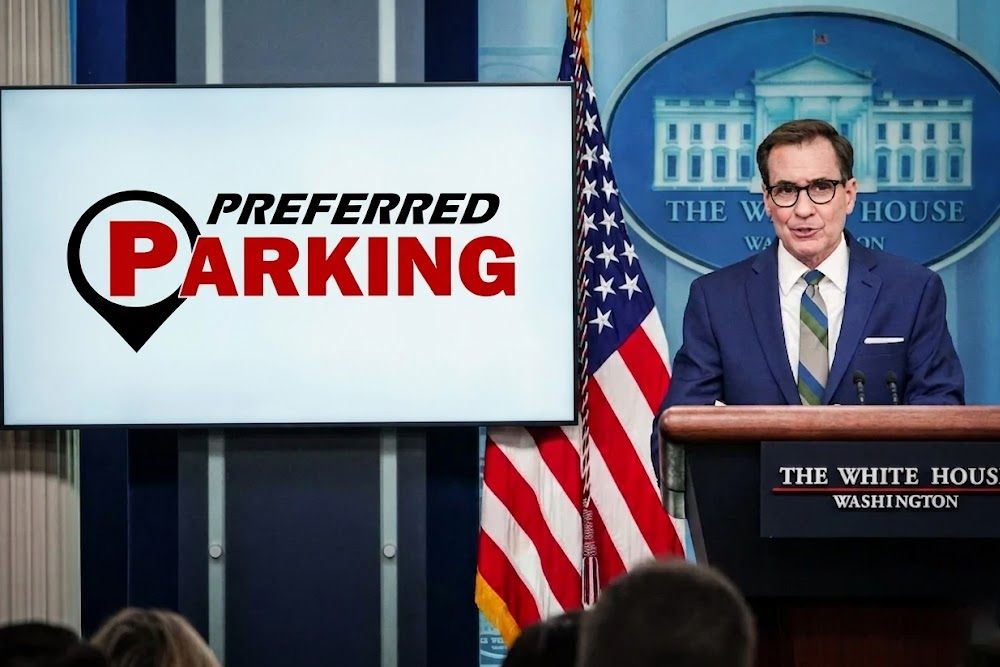
“For too long, this organization has operated with a level of ruthlessness that defies international norms,” said a National Security Council spokesperson during a briefing at the White House. “From the calculated deployment of the ‘Yellow Envelope’ to the extrajudicial booting of Honda Civics, Preferred Parking has demonstrated a clear intent to destabilize the morning commutes of peaceful citizens.”
Preferred Parking, which began in 1961 as Friendly Parking, now controls over 17,000 spaces across multiple cities.
The State Department identified several “high-conflict zones” currently under the company’s occupation, including Charlotte, Raleigh, Asheville, and a strategic southern outpost in St. Petersburg, Florida.
For residents, the designation brings a sense of grim vindication.
“I stepped out of my car for forty-five seconds to grab a coffee, and when I came back, there was a man in a neon vest already zip-tying a boot to my tire,” said one local resident. “I feel safer knowing the Marines can now legally intervene.”
Another citizen, who requested anonymity for fear of predatory towing, added: “Those yellow envelopes are basically improvised explosive devices for your bank account. You see one on your windshield, and your whole week is leveled.”
The filing outlines a pattern of “terroristic” activity, including $100 event-day pricing for gravel lots, “ghost lots” where payment kiosks are hidden behind dumpsters, and the rapid annexation of nearly every vacant square inch of pavement.
Effective immediately, any American found paying for a daily pass could face federal prosecution.