

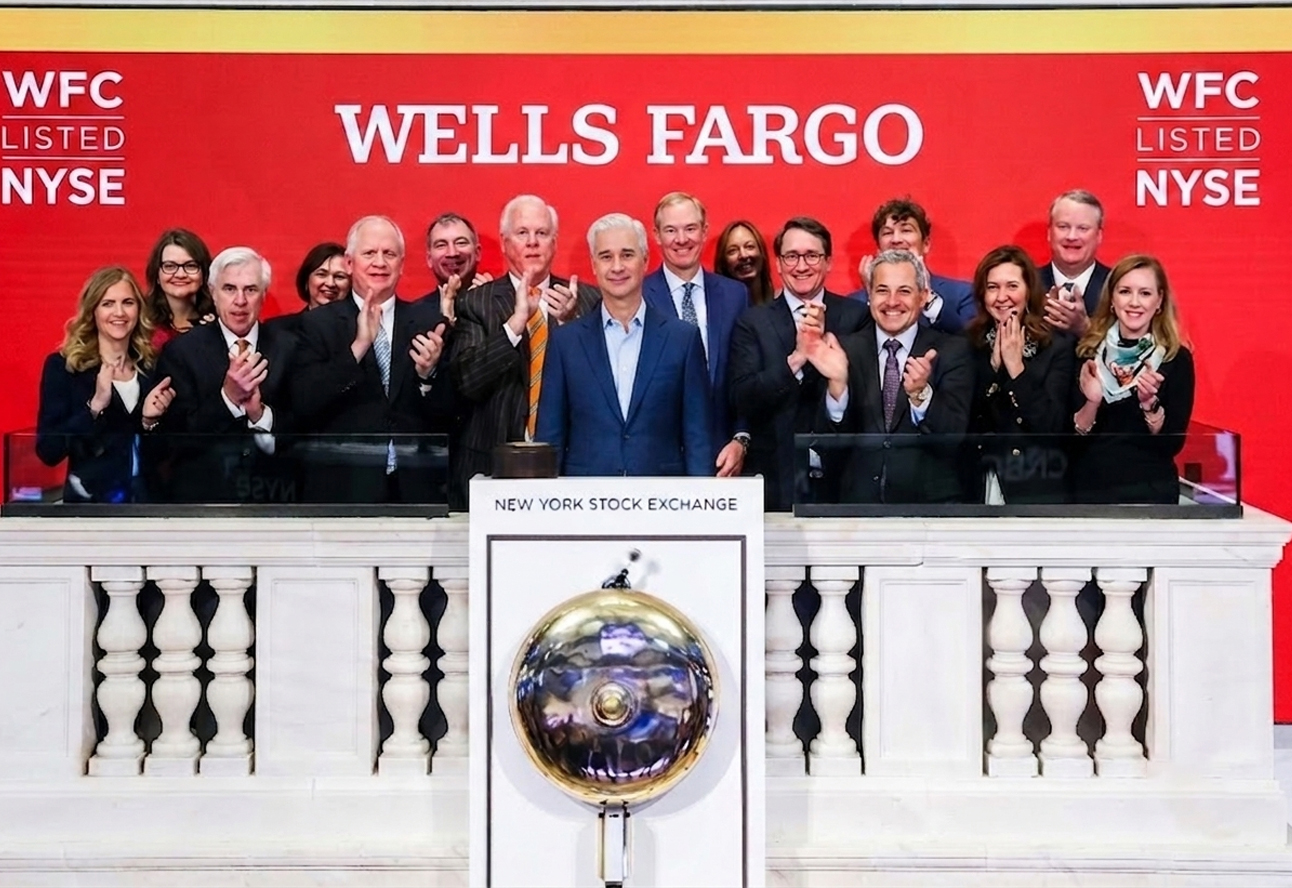
CHARLOTTE — Wall Street analysts were reportedly euphoric on Wednesday after Wells Fargo announced it had successfully terminated its remaining 197,000 human employees, replacing the entire global workforce with a single, highly touted generative AI agent that unequivocally sucks dick.
Following the announcement that the massive, multi-billion-dollar financial institution was now entirely operated by a software program that hallucinates federal interest rates and constantly forgets what a mortgage is mid-sentence, shares of Wells Fargo (WFC) skyrocketed an unprecedented 14%.
“We are incredibly proud to usher in a new era of frictionless, cloud-native banking,” said Wells Fargo CEO Charlie Scharf during a Q3 earnings call. “By eliminating our bloated human capital and deploying a large language model that completely sucks dick at every conceivable financial task, we have achieved a beautiful, crisp $0.00 payroll liability.”
Financial analysts at Morgan Stanley immediately upgraded the stock to a “Strong Buy,” praising the C-suite’s visionary approach to aggressive operational synergy.
“From a margins perspective, this is a masterclass in structural optimization,” wrote one leading tech analyst. “Does the new agent understand federal compliance laws? No. Does it just reply ‘Got It’ to urgent fraud alerts? Yes. It sucks dick at a scale human employees simply couldn’t match. But the cost-to-income ratio has never looked better, and we expect a massive dividend payout next quarter.”
In Charlotte, North Carolina — formerly the bank’s largest employment hub — the new AI is already operating at 100% adoption capacity, successfully responding to complex regulatory inquiries by randomly changing the font size in an Excel spreadsheet and gently reminding the SEC that it is “just an AI language model.”
At press time, a Wells Fargo employee was seen frantically copying and pasting the same generic paragraph into an AI window just to artificially inflate the bank’s daily productivity metrics, which Wall Street enthusiastically called “the most innovative, forward-looking valuation framework of the fiscal year.”