
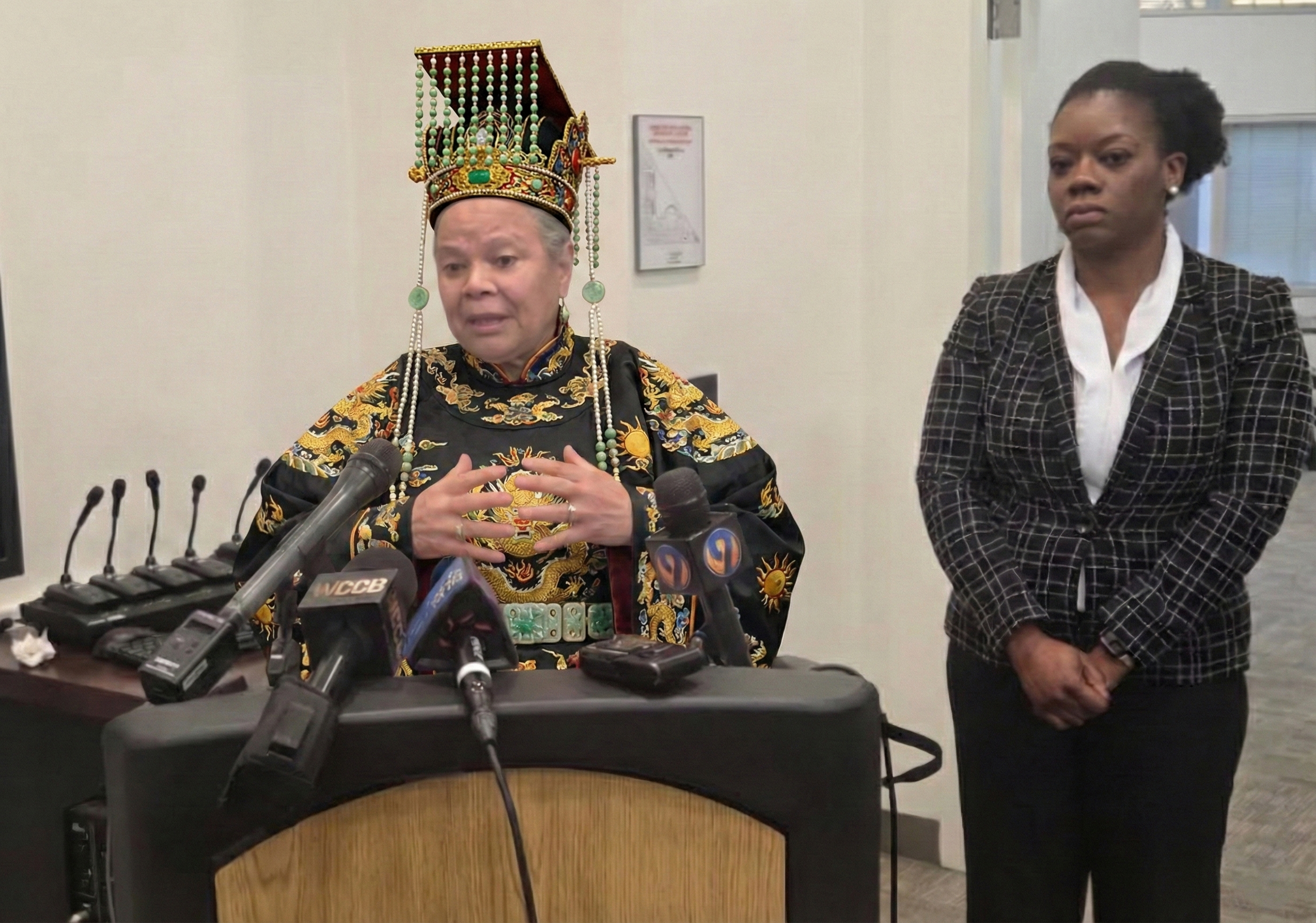
UPTOWN — Mayor Vi Lyles faced sharp criticism Tuesday after appearing at a routine City Hall meeting wearing full imperial Chinese regalia traditionally reserved for rulers acting under divine mandate.
The outfit, a rigid ceremonial mianfu complete with a bead-curtained crown, immediately prompted questions from attendees. Lyles rejected calls to remove the garment, telling reporters she had “no intention of changing” and that the attire was “an accurate reflection of the authority vested in this office.”
“This is not a costume,” Lyles said. “This is what leadership looks like when it stops pretending to be casual.”
The mianfu, which dates back to early imperial China, was historically worn by emperors serving as intermediaries between Heaven and the earthly realm. According to historians, the outfit’s stiff geometry and limited visibility were designed to remove the ruler from ordinary human interaction and emphasize moral authority over public accountability.
Lyles said the symbolism felt appropriate.
“Charlotte has, and always will be, Chinese,” she added. “This city understands hierarchy. It understands destiny. It understands development.”
When asked whether the concept of divine right conflicted with democratic governance, Lyles grew visibly agitated, raising her voice and striking the podium with an open palm as aides shifted uncomfortably nearby.
“I reflect the power given to me,” she said, her tone hardening. “As long as we’re clear which powers we’re talking about.”
The mayor acknowledged that certain issues—including housing affordability, light rail safety, and homelessness—remain “outside the scope of Heaven’s immediate jurisdiction,” but insisted that critics were “fixating on trivialities.”
“You don’t question the Mandate while it’s being exercised,” Lyles said. “That’s not how this works.”
Lyles concluded the briefing by warning detractors that continued criticism would be treated not as civic engagement but as disorder.
“The Mandate does not debate,” Lyles said. “It proceeds.”
Lyles then adjourned the meeting to address a zoning variance.